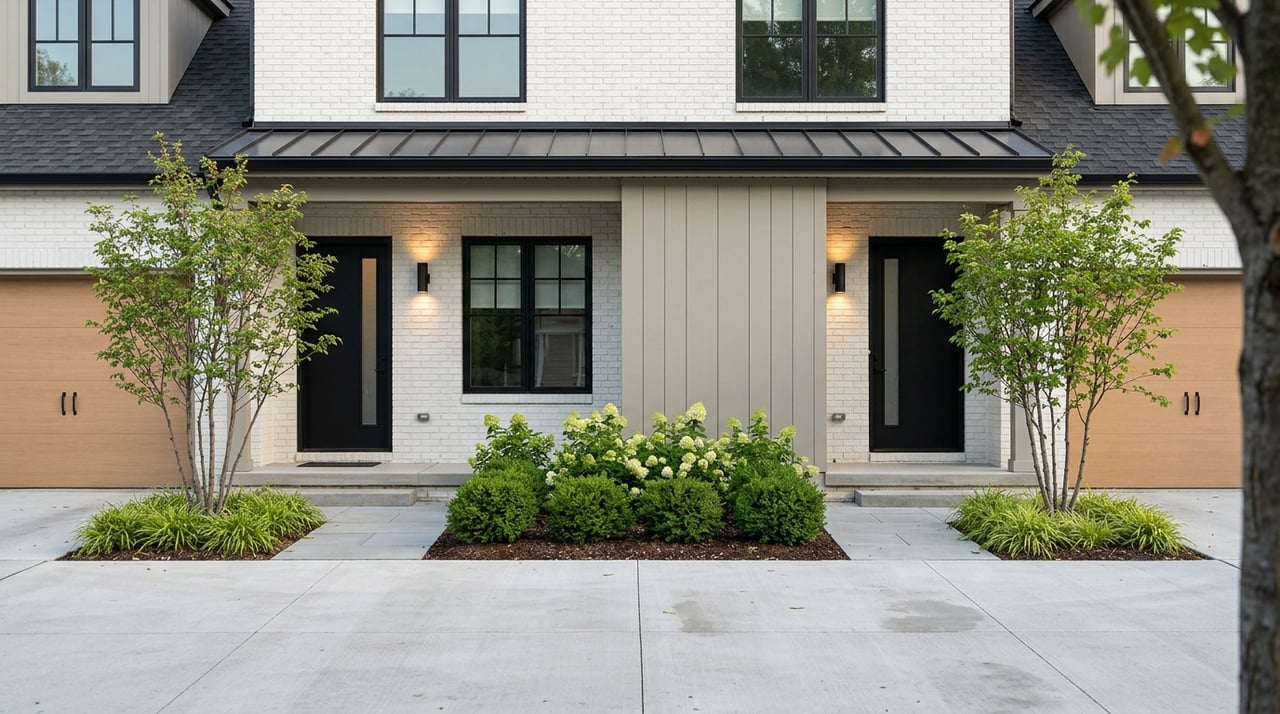
Is Liberty Township A Smart Market For Long-Term Investors?
May 7, 2026
May 7, 2026
Wondering whether Liberty Township is the kind of place you buy and hold for years, or one you pass on because the numbers feel too tight? If you are looking at long-term rentals in Butler County, that is a fair question. Liberty Township has several signs investors like to see, but it also comes with a price point that changes the math. Let’s dive in.
If you are evaluating Liberty Township as a long-term investment market, the first thing to understand is its position in the region. The township sits along I-75 in the Cincinnati-Dayton corridor, with Cincinnati about 20 miles south and Dayton about 25 miles north. That location matters because it supports commuter access, employer access, and long-term housing demand.
Liberty Township has also treated the Liberty Way corridor as a major growth engine since the 2009 interchange opened up about 600 undeveloped acres. Local planning projected roughly 10,000 jobs at build-out in that area. For an investor, that kind of infrastructure-backed growth story is usually more important than short-term market noise.
The strongest case for Liberty Township is not bargain pricing. It is durability. The market shows a combination of higher incomes, low poverty, low mobility, and a housing base that is heavily owner-occupied.
Recent estimates place the township population in the mid-40,000s. ACS 2024 five-year data shows 44,633 residents, while a Butler County Finance Authority and ESRI profile places it at 46,474. Median household income is about $148,000, bachelor's degree attainment is 54.5%, poverty is 3.8%, and only 6.4% of residents moved in the prior year.
That low annual move rate stands out. For a long-term investor, it suggests a more stable resident base and a suburban market where people tend to stay put. Stable communities do not remove risk, but they can support more predictable leasing and resale conditions over time.
Liberty Township is much more owner-heavy than Butler County overall. According to the Butler County Finance Authority profile, the township has 15,645 housing units, including 13,204 owner-occupied units, 2,021 renter-occupied units, and 420 vacant units. That works out to about 84.4% owner-occupied, 12.9% renter-occupied, and 2.7% vacant.
Compared with Butler County’s 69.9% owner-occupied rate, Liberty Township clearly leans toward ownership. That can matter in two ways. First, it can limit the depth of the renter pool compared with a more renter-dense market. Second, it can improve resale flexibility because your future buyer may be an owner-occupant, not just another investor.
For many small investors, that second point is key. A property that works as a rental today and also appeals to a future owner-occupant can create a cleaner exit path later.
Rent data in Liberty Township is solid, though the exact number depends on the source. Apartments.com reported average apartment rent at $1,680 per month in March 2026, down 0.8% year over year, with most rents between $1,501 and $2,000. Zillow’s 45011 page showed average rent at $1,836 per month, up 2.9% year over year.
Those two figures do not perfectly match because they measure the market differently. Apartments.com relies on CoStar-based market data, while Zillow tracks asking rents through its own methodology. Still, both sources support the same broad conclusion: rents in this area are relatively strong for Butler County.
That becomes even clearer when you compare Liberty Township with the county benchmark. Butler County’s median gross rent is $1,098, which is much lower than the rent figures tied to Liberty Township. In practical terms, this supports the idea that Liberty Township functions more like an upper-income suburban rental market than a broad cash-flow market.
Long-term investing is not only about rent. You also want to know whether the resale market has depth. On that front, the 45011 data points are encouraging.
Zillow’s 45011 home value index is $367,926. The same page shows homes going pending in around 15 days, with 109 homes for sale and 46 new listings. That is not the profile of a stagnant market.
A market where listings move in about two weeks can support investor confidence, especially if your hold strategy includes the possibility of selling into owner-occupant demand later. It does not guarantee appreciation or a quick future sale, but it does suggest active buyer interest.
This is where Liberty Township becomes more nuanced. Based on rough screening math from the research, the implied gross rent-to-value ratio is about 6.0% using Zillow rent and about 5.5% using Apartments.com rent. That is helpful as a first-pass investor screen, but it is not the same as a full cap-rate analysis.
In plain English, Liberty Township does not look like a bargain-basement cash-flow play. If your strategy depends on squeezing out the highest possible yield from the lowest possible acquisition cost, you may find other markets more attractive. If your strategy values stability, stronger household incomes, and potential resale appeal, Liberty Township starts to make more sense.
Good long-term rental markets usually have several demand drivers working at once. Liberty Township checks that box. Jobs, regional access, daily convenience, and community infrastructure all play a role.
The township’s 2025 Butler County Finance Authority profile lists 980 total businesses and 10,235 locally employed workers. Major sectors include healthcare and social assistance, food service, retail trade, and educational services. The township also identifies Cincinnati Children’s Hospital Medical Center - Liberty Campus and The Christ Hospital Medical Center - Liberty Township as healthcare anchors.
That job mix matters because it points to a steady suburban tenant base. Rather than a highly transient renter profile, Liberty Township appears better suited to healthcare workers, education staff, retail and service professionals, and households looking for a stable suburban location within the Cincinnati-Dayton region.
Amenities may seem secondary, but they influence retention and overall market strength. Liberty Township’s central business district information points to additions like Liberty Center, Ohio’s first Wawa, a new MidPointe Library branch, and Liberty Collective. These types of additions improve day-to-day convenience and reinforce the area’s long-term livability.
For investors, livability matters because it helps explain why people choose to stay in a market. In suburban locations especially, tenant retention often depends on practical quality-of-life factors like shopping, services, healthcare access, and ease of commuting.
Lakota Local Schools reports that it is the largest suburban public school district in southwest Ohio and serves more than 17,500 students in West Chester and Liberty townships. The district also says enrollment growth led it to end open enrollment for new non-employee K-6 students beginning in the 2024-25 school year.
For an investor, that is not about ranking schools. It is about reading demand. Rising enrollment pressure is one more signal that households continue to choose this area, which can support housing demand over the long run.
Liberty Township’s 2025 comprehensive plan gives useful clues about where the market may be heading. The township says it wants coordinated land uses, thriving residential neighborhoods, active commercial and retail areas, and additional commercial, retail, medical, healthcare, and high-tech light-industrial uses along I-75 near the planned Millikin Way interchange.
The plan also says the township will support planned neighborhood communities with a mix of housing types. That is an important signal. It suggests future growth is expected to be structured and intentional rather than scattered and purely speculative.
Another planning detail matters even more for rental investors. The township’s regional mixed-use framework says multi-family residential should not stand alone, but should be part of a larger master plan with significant commercial development. In practical terms, that points toward mixed-use communities, townhomes, and master-planned apartment product rather than small scattered apartment infill.
Based on the current mix of inventory and the township’s planning direction, some strategies appear stronger than others. Apartments.com highlights rental communities such as Liberty Flats, Relay 129 Apartments & Townhomes, Liberty Center Apartments, and Lakota Pointe Townhomes. That lines up with the township’s emphasis on integrated, planned development.
For a smaller investor, the cleanest long-term hold may be a well-located single-family home or townhome. That type of property can appeal to renters today while also attracting owner-occupant buyers on exit. In a market this owner-heavy, that flexibility can be a real advantage.
A practical way to think about Liberty Township is this:
Yes, for the right investor.
Liberty Township looks like a solid long-term suburban hold market, especially if you value durable demand, strong household income, low mobility, and a resale market that still moves quickly. It is not the kind of market that screams discounted entry or outsized cash flow. Instead, it offers a more measured investment case built on stability, planning, regional access, and a tenant base that may be more reliable than in more transient markets.
If your investment style is finance-first and long-view, Liberty Township deserves serious consideration. The opportunity here is less about buying cheap and more about buying well.
If you want help evaluating Liberty Township opportunities through a strategic, numbers-aware lens, Luana King can help you compare properties, assess long-term fit, and make a more confident move.
Stay up to date on the latest real estate trends.

Real estate is one of the most powerful tools for building wealth and securing your financial future. With Luana King as your trusted advisor, invest with confidence and expert guidance at every step.
Get In Touch With Our Team To Learn More