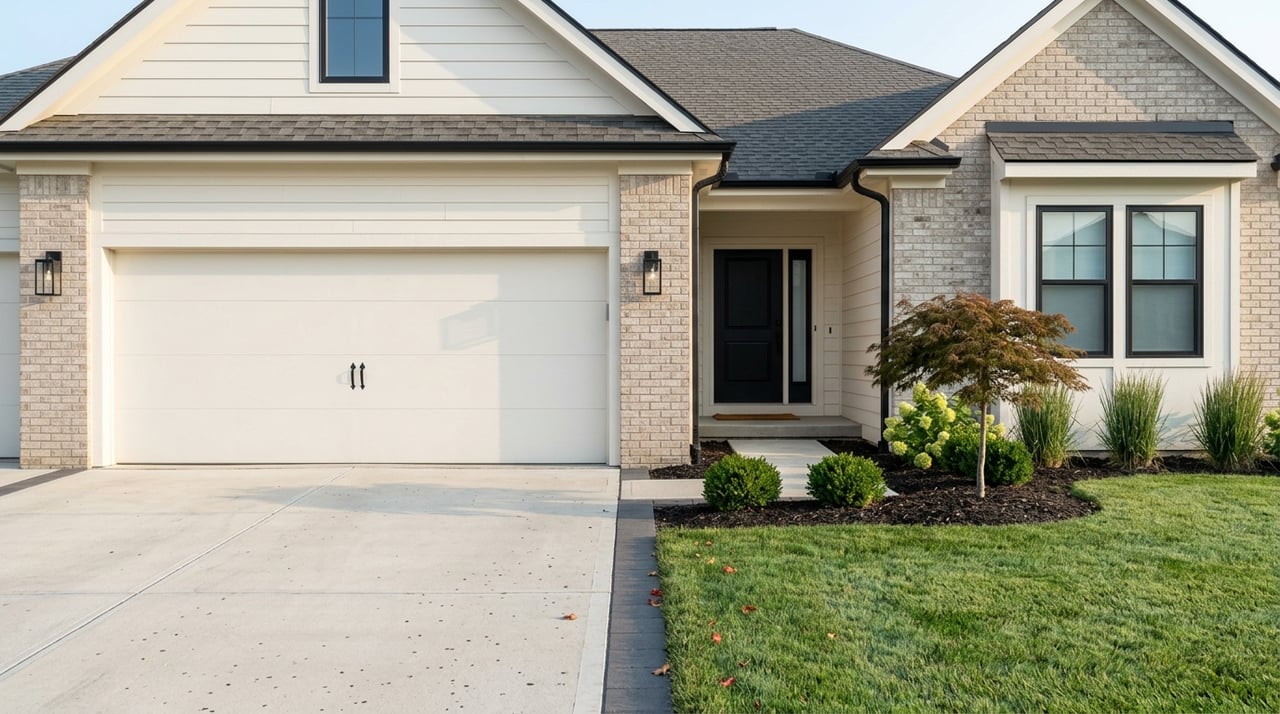
Living In Monroe: A Commuter’s Guide To Cincinnati And Dayton
May 21, 2026
May 21, 2026
If you want easier access to both Cincinnati and Dayton without living in the middle of either city, Monroe deserves a close look. For many buyers, the challenge is finding a place that supports office commutes, hybrid schedules, and everyday convenience without adding unnecessary complexity. This guide walks you through how commuting from Monroe works, what travel options you have, and how the city’s housing pattern fits different lifestyles. Let’s dive in.
Monroe’s location is the main reason it stands out. The city sits directly on I-75 at Exit 29, and the city describes Monroe as within a 30-minute drive of both downtown Cincinnati and downtown Dayton. Monroe’s 2024 ACFR also places it midway between the two metros, with access to SR 4 and SR 63.
That matters if you want flexibility in where and how you work. Monroe is less about urban, car-free living and more about efficient regional access. If your week includes a mix of office days, remote work, and occasional in-person meetings, that setup can be very practical.
For most commuters in Monroe, driving is the simplest daily option. I-75 is the backbone of the commute, and Monroe’s interchange access is a major part of the city’s appeal. If you work in either metro, you can use Monroe as a base while keeping both job markets within reach.
This dual-market access can also help if your household does not share the same commute pattern. One person may head toward Cincinnati while another works closer to Dayton or locally in Butler County. Monroe’s position between the two makes that kind of split schedule more manageable.
If your job is tied to downtown Cincinnati, Uptown, or other nearby employment centers, Monroe offers a straightforward highway route south. The city’s location and Butler County transit options make Cincinnati the more transit-friendly direction from Monroe.
This can be especially useful if you want to reduce the number of days you drive all the way into the city. Some households use Monroe as a home base and then mix driving with park-and-ride options depending on the day.
Dayton access is still one of Monroe’s location strengths, but the current public transit story is different. Based on the available transit information, Dayton-oriented commuting is mainly a drive-time advantage rather than a bus-based commuter option.
If you work north of Monroe, that means your routine will likely depend more heavily on your car. For many buyers, that is still a fair trade if the home, neighborhood setting, and regional access align with long-term goals.
Monroe’s public transit setup is more limited than what you would expect in a larger urban center, but there are still useful options. The strongest commuter service for Monroe-area residents is geared toward Cincinnati.
Butler County Regional Transit Authority operates CincyLink for Cincinnati-bound commuters. According to the route information, CincyLink includes four peak morning round trips and four peak afternoon round trips, with stops at:
The express version to Government Square includes two morning trips and two afternoon trips. For commuters focused on downtown Cincinnati, that creates a more structured option than driving every day.
BCRTA identifies two commuter park-and-ride locations that are especially relevant for Monroe residents:
These locations are not inside Monroe itself, but they can still support a mixed commute strategy. You may choose to drive a short segment and then ride into Cincinnati, especially on days when downtown parking or highway stress is a concern.
BCRTA’s January 2026 fare announcement says CincyLink costs:
Those numbers can help you compare the cost of driving daily versus combining driving and transit. If you commute only part of the week, the per-ride option may be enough. If you travel more regularly, the monthly pass may be worth reviewing.
For local trips within Butler County, BCRTA also offers BGo, a curb-to-curb on-demand service. The agency says trips can be booked the same day, the app supports requests within a 45-minute window, service runs from 6 a.m. to 11 p.m. Monday through Friday, and the fare is $5 per trip in the service area.
BGo is not a replacement for a full regional commuter system, but it can be helpful for local errands or connecting trips inside Butler County. If your routine includes some flexibility, it adds another layer of mobility beyond driving yourself everywhere.
Monroe’s employment base helps explain why the city appeals to a broad range of commuters. The 2024 ACFR lists top employers including Kroger Fulfillment Network, Kohl’s Distribution, Amazon Distribution, Home Depot Distribution, Deceuninck, UGN, Monroe Local Schools, Walmart Associates, Krispy Kreme Doughnut Corporation, and Worthington Steel Company.
Together, those ten employers account for about 40.37% of total employment in Monroe. That points to a local economy centered on logistics, distribution, manufacturing, retail-related operations, and school employment.
For buyers and relocating households, this matters because Monroe is not only a bedroom community. It also sits within a regional job environment that supports practical, year-round employment activity.
Monroe’s workforce dashboard adds useful context for households comparing job access. In the city’s 45-minute drive-time region:
If your work touches logistics, manufacturing, education, retail operations, or a broader Cincinnati-Dayton commute pattern, Monroe lines up well with that regional economy.
Your commute is only half the equation. The other half is whether the housing stock fits how you actually want to live.
Monroe’s 2019 housing study found a relatively homogeneous housing stock dominated by single-family homes. It also noted that since 2008, single-family homes made up 100% of new residential builds.
That pattern is still relevant today. Monroe’s 2024 ACFR reports that the city approved 219 new single-family residential lots in 2024, which suggests the single-family emphasis remains active in the current pipeline.
Monroe’s housing stock grew by 73% from 2000 to 2016, and the city’s occupancy rate stood at 93% in 2016. Those numbers show a city that has experienced meaningful residential growth while maintaining a largely single-family identity.
For many commuters, that means Monroe may feel more predictable than markets with a heavier mix of dense apartment development. If you want more space, a neighborhood setting, or a suburban layout with direct highway access, Monroe is built around that model.
City planning documents show several key residential areas. Residential areas are concentrated in the north-central, south-central, and far-western parts of Monroe.
The downtown and Main Street area includes a mix of older and newer housing stock. Smaller multi-family pockets appear along East Avenue, Courtland Drive, Keswick Drive, Wyndcrest Court, and the south side of Lebanon Street.
For buyers comparing housing options, Monroe can be thought of in three broad residential patterns:
That framework can help you narrow your search based on commute priorities, lot preferences, and how close you want to be to Monroe’s main travel routes.
The city identifies Monroe Crossings as its largest newer subdivision. It is described as a planned mixed-use area with 890 homes, 150 apartments, office and retail space, and a 27-acre public park.
Planning documents also identify large subdivision clusters on the north and west side of town, including Greenridge Meadows, Tall Oaks, Whispering Oaks, Heritage Green, Wexford, Brittany Woods, and Todhunter Heights. In south-central Monroe, areas include Peaceful Acres, Fairview Heights, Monroe Meadows, Bridle Creek, and Monroe County Estates.
If your goal is a home base that supports commuting first and lifestyle second, these residential pockets are worth comparing carefully. Travel time to I-75, neighborhood layout, and home style may affect your day-to-day experience more than citywide averages do.
Even if Monroe is not trying to be a dense urban center, that does not mean your day has to revolve only around work and highways. For hybrid households, simple outdoor access and local recreation can make a big difference.
Monroe’s park system includes five parks. The city also says it is a founding organizational member of Tri-State Trails and is working to complete the Great Miami River Trail through Monroe.
Bicentennial Commons Park is especially notable for buyers who value outdoor access close to home. Located on the city’s west edge, it connects to the Great Miami River Trail and US Bike Route 25 and includes a covered playground, restroom facility, and walking paths.
If you work from home several days a week, features like this can add balance to your routine. A quick walk, bike ride, or park visit can matter more than a long list of urban amenities if your priority is convenience and breathing room.
Monroe is a strong match if you want practical access to both Cincinnati and Dayton, with the clearest transit support aimed toward Cincinnati. It also fits buyers who prefer a housing market that still leans heavily toward single-family homes and established subdivision patterns.
You may find Monroe especially appealing if your routine includes any of the following:
The key is to match the home search to your real schedule. In a commuter market like Monroe, location within the city, access to I-75, and your preferred travel method can shape daily life just as much as the house itself.
If you are weighing Monroe against other Cincinnati suburbs, a strategic home search can help you look beyond price alone. Commute pattern, neighborhood layout, and long-term flexibility all deserve a place in the decision.
Ready to compare Monroe with your commute, budget, and long-term goals? Connect with Luana King for a personalized consultation.
Stay up to date on the latest real estate trends.

Real estate is one of the most powerful tools for building wealth and securing your financial future. With Luana King as your trusted advisor, invest with confidence and expert guidance at every step.
Get In Touch With Our Team To Learn More